

Sustainability,
written down.
Acustio has published a full account of how it thinks about materials, reuse and product life. It is not a badge page. It is the reasoning, the evidence we hold, and the parts we have not finished yet.
There is a comfortable version of sustainability in our industry. Put recycled content into a panel, print the percentage on the datasheet, and the question is considered answered.
We think the harder question is what happens to that panel afterwards.
A panel with recycled content that gets thrown away when the office is rearranged has not saved very much. A panel that moves to a different desk, changes function, gets a new base, comes back to us for refurbishment and goes out again to another project stays out of the waste stream for years. That is the work we have put our engineering into.
Recycled content describes what a product is made of. Designing for reuse describes how long it stays in use. Acustio works on the second one, and treats the first as one input among several.
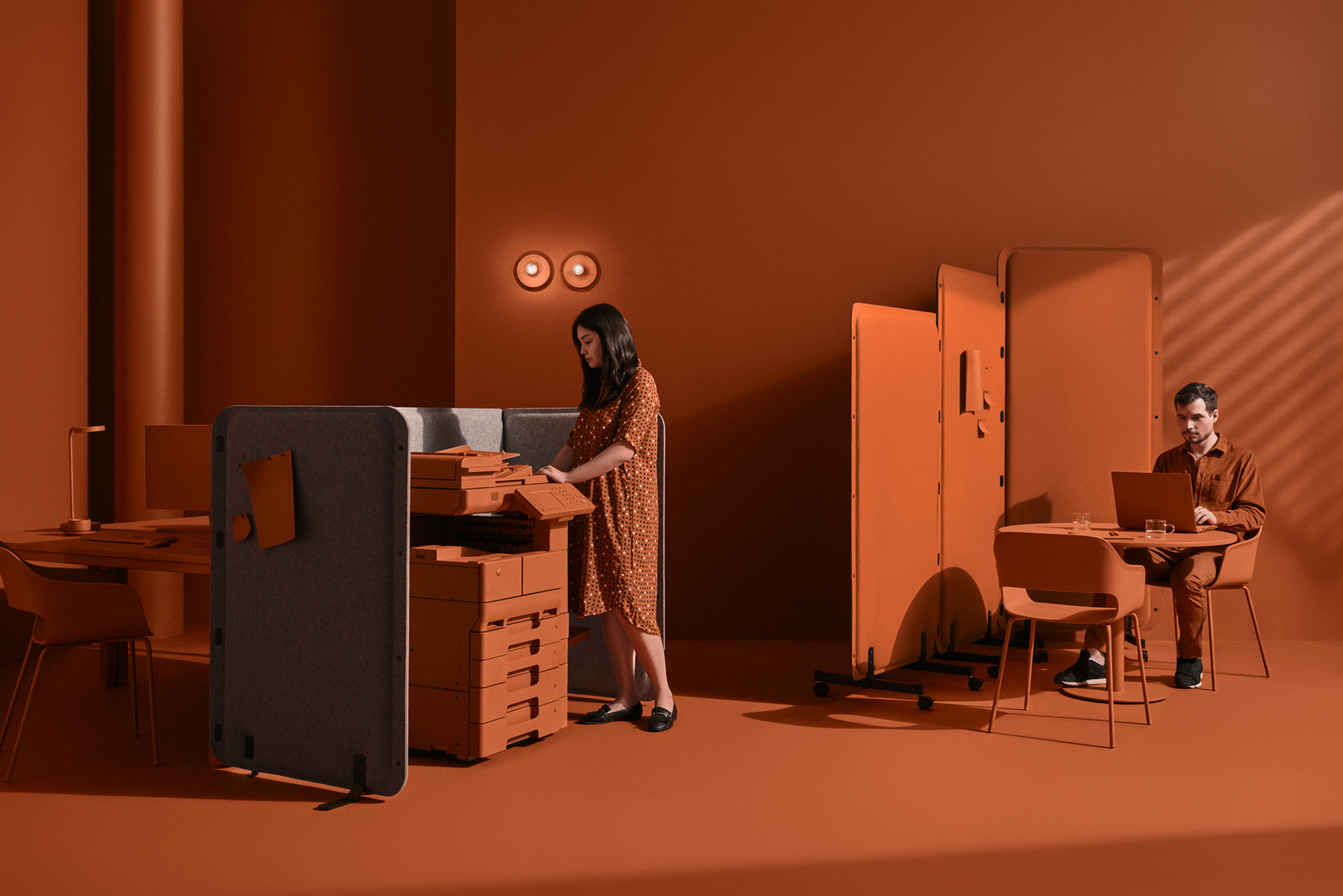
So the new page is built around one idea: keep value in use for as long as possible. It covers:
- how a panel is made, and what we can document about the felt groups we use
- what our certifications cover, and what they do not
- why selected products share the same base mounting geometry, so a base can move between them
- why a desk panel can usually stay when the desk under it is replaced, because the adapter carries the difference
- how Heaven Booth is taken apart and set up again as a different configuration from the same panels
- Acustio Second Life: what happens when a client no longer needs a product, and the order we work in
- the tree programme connected to returned panels
- Acustio Lab, where we test what could work better next
- and what we are still measuring, written as open items rather than achievements
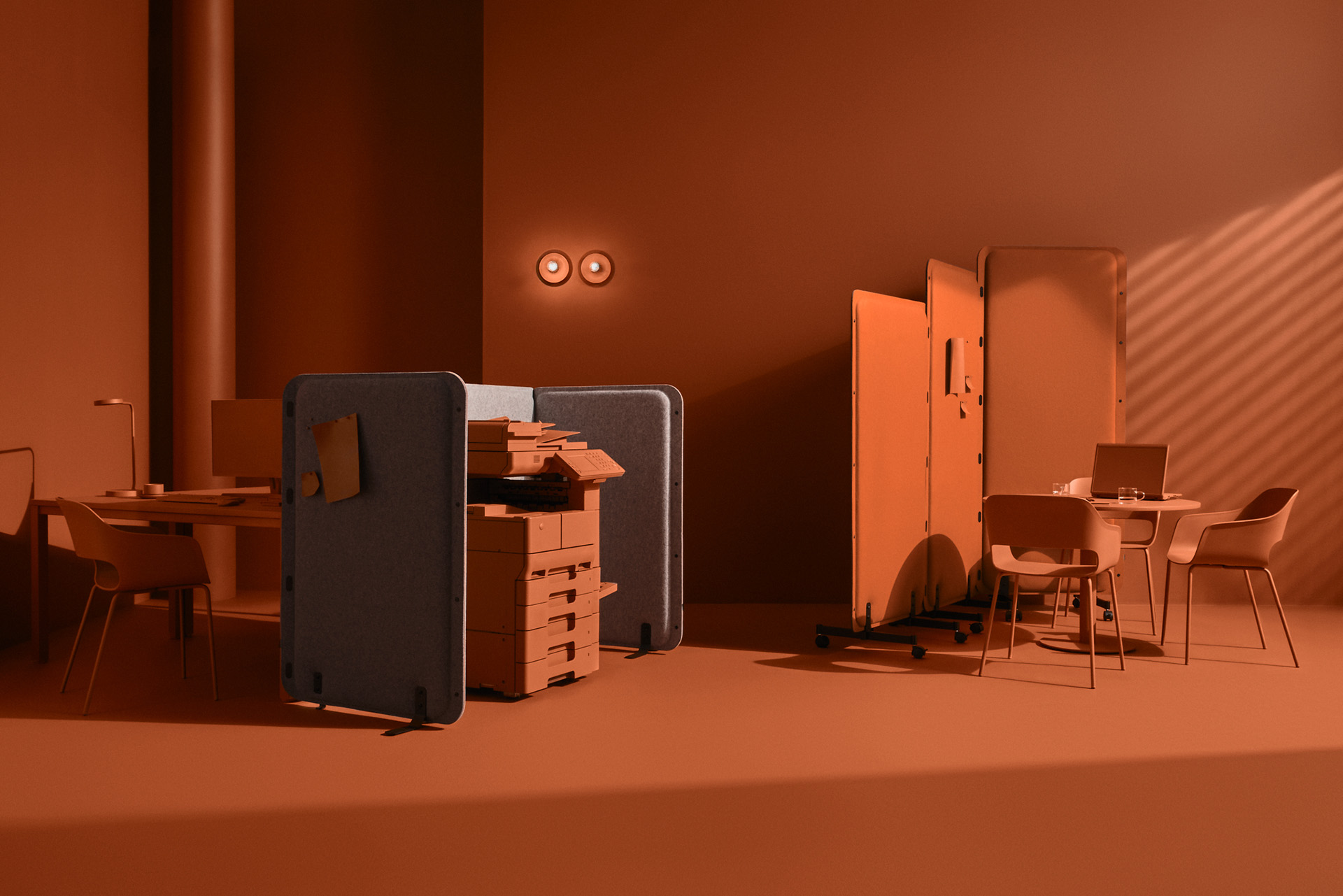
Where we do not have verified data, the page says so instead of filling the gap with an estimate.
What does Acustio mean by circular design?
Acustio designs acoustic products so they can be reconfigured, moved and repaired instead of replaced. The order of preference is product first, component second, material last, and recycling only after that.
Does Acustio take products back?
Yes. Acustio Second Life assesses returned products and components for direct reuse, refurbishment, reconfiguration, component recovery and material recovery.
What materials does Acustio use?
Acustio works with four felt groups, two wool and two synthetic, selected per application. The documentation for each is published on the Sustainability page.
Use it. Move it. Adapt it. Use it again.